
Stranded in Space
Play Stranded in Space
Stranded in Space Screenshots















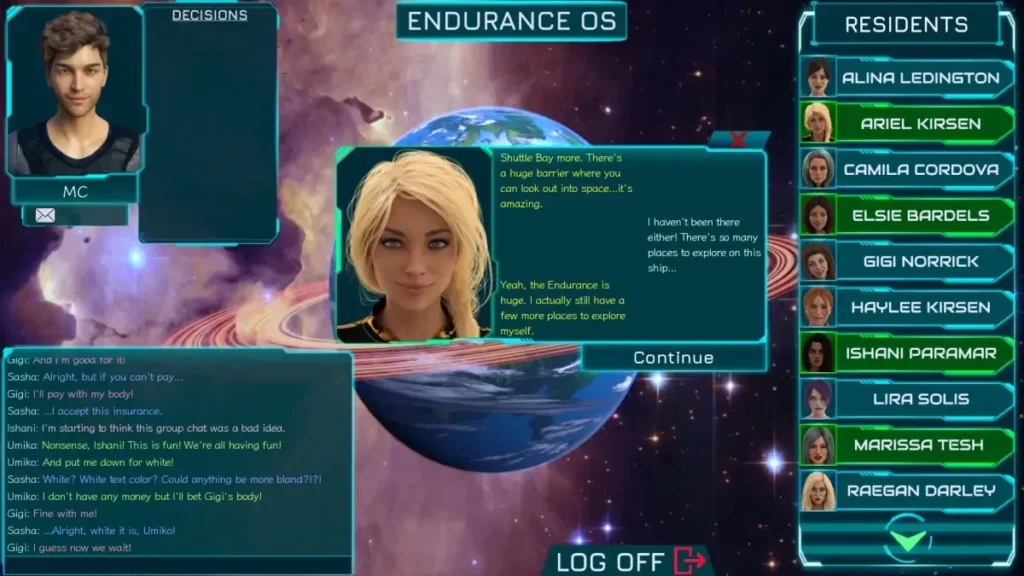

Stranded in Space review
In-depth walkthrough, tips, and player insights for Stranded in Space
Stranded in Space is a narrative-driven adult-themed game that blends exploration, character interactions, and choices that affect outcomes; this guide will walk you through its systems, story beats, and practical strategies to get the most from your playthrough while avoiding common pitfalls. In the following sections I’ll share hands-on tips, personal impressions from my play sessions, and chapter-by-chapter advice so you can progress efficiently and enjoy the narrative and character content to the fullest.
Gameplay Overview and Core Mechanics
Welcome, spacefarer! 👋 You’ve just crash-landed on a mysterious, hostile planet, and the only thing between you and the void is your wits. The Stranded in Space gameplay is a thrilling, sometimes punishing, blend of survival, storytelling, and interpersonal drama. Before you dive into repairing your ship or uncovering planetary secrets, you need to understand the core systems that make this game tick. Think of this chapter as your pre-flight checklist for success.
Let’s break down everything you need to know about the game mechanics Stranded in Space uses to create its unique, immersive challenge.
What are the core systems?
At its heart, Stranded in Space is governed by a few interconnected loops. Mastering these is the key to moving from barely surviving to truly thriving.
Your Inventory & The Survival Wheel: 🎒 Your backpack is your lifeline, but it’s severely limited. You’ll constantly be making tough choices: carry more salvage parts for crafting, or more food for the long trek? Alongside your inventory is your Personal Status Wheel, tracking four vital metrics: Hunger, Thirst, Fatigue, and Health. Let any of these hit zero, and it’s game over. This constant balancing act is the foundation of all resource management tips you’ll learn.
Dialogue & Relationship Webs: 💬 Every character you meet on this rock has their own agenda, fears, and secrets. The dialogue choices guide your relationships. There’s no simple “good” or “bad” choice—only consequences. Your words can build Trust with the pragmatic engineer, Kara, or raise Suspicion with the secretive biologist, Ren. These hidden affinity meters open or close entire story branches, side quests, and even potential endings.
The Planetary Clock: ⏰ Time is your most precious and relentless resource. The game operates on a strict day/night cycle. Certain characters are only available at their posts during “work hours,” while dangerous fauna become more active at night. Some story events are on a hidden timer; procrastinate on a crucial repair, and you might miss a rescue signal forever.
Mini-Games & Puzzles: 🧩 From delicately rewiring a shattered communications console to playing a game of “Star Dice” with a crewmate to win resources, variety is the spice of survival. Each mini-games strategy is unique. Some test your reflexes, others your logic. Success often grants rare materials, information, or improved crew morale.
How progression and resources work
Progression in Stranded in Space isn’t about leveling up a character, but about improving your situation. Your crashed shuttle is your base, and every system you repair—Life Support, Navigation, Engines—unlocks new areas of the planet and new story beats. Resources are the currency for this progression.
Resources fall into three broad categories:
* Basics: Food, Water, Medical Herbs. Used for daily survival.
* Crafting: Scrap Metal, Wires, Composite Plates. Used for repairing gear and base modules.
* Special: Data Chips, Alien Artifacts, Aged Brandy. Used for critical story progression or high-level trade.
The magic (and stress) happens in the conversion between these categories. For example, you might use Crafting resources to build a water purifier, which then generates Basic resources, letting you spend less time scavenging for water and more time exploring a cave that holds Special resources.
| Resource Type | Primary Sources | Key Early-Game Uses |
|---|---|---|
| Scrap Metal | Wreckage Sites, Abandoned Outposts | Tool repairs, basic shelter upgrades |
| Electronics | Salvaged Drones, Broken Terminals | Fixing scanner, crafting communication devices |
| Nutrient Paste | Fungal Caves, Trade with Crew | Staving off Hunger, trading for information |
| Hydration Gel | Condensation Traps, Desert Cacti | Managing Thirst during long expeditions |
Character affinity is another form of progression. Here’s how your dialogue choices typically influence two key crew members:
| Crew Member | Actions that Build Affinity | Actions that Lower Affinity | High Affinity Reward |
|---|---|---|---|
| Kara (Engineer) | Prioritizing ship repairs, sharing technical parts, pragmatic dialogue choices | Hoarding tech for yourself, reckless actions that damage equipment | Access to high-tier crafting blueprints & repair discounts |
| Ren (Biologist) | Exploring ecological sites, sharing alien samples, cautious dialogue choices | Aggressively harvesting flora/fauna, dismissing research | Locations of rare healing plants & warnings about hostile fauna |
Practical tips for new players
My first play session was a masterclass in failure. 🚀 I was so excited to explore that I sprinted into the crystalline caves on Day 2, ignoring my dwindling water supply. I found amazing artifacts! But by the time I stumbled back to base, my Thirst meter was critical, my Fatigue was zero, and I collapsed, losing the entire afternoon of progress—and all those precious artifacts. The lesson? The planet is not going anywhere. Your character is. Always plan excursions around your survival metrics, not just your curiosity.
Here are 5 tactical beginner tips Stranded in Space veterans swear by:
- Embrace the “Two-Trip” Rule: 👟 When you find a rich resource node, don’t overload yourself. Being over-encumbered drains Fatigue fast. Take what you need for immediate goals, mark the location on your map, and come back later.
- Talk Before You Walk: 🗣️ Each morning, check in with every available crew member. New dialogue options often appear after story events, and they frequently give hints about daily opportunities or dangers, effectively serving as free resource management tips.
- Master One Mini-Game First: 🎯 The “Wire Puzzle” for repairing electronics is everywhere. Spend time learning its pattern. Being proficient means using fewer precious Electronic parts on each repair, saving them for more important projects.
- Save Strategically, Not Just Frequently: 💾 The game has an autosave at the start of each day. Always create a manual save then, and another before attempting a risky action or a major dialogue branch. This lets you experiment with dialogue choices guide outcomes without ruining your run.
- Prioritize the Scanner: 📡 Your first major craft should be the Portable Scanner. It highlights resources and points of interest through terrain, making your scavenging trips infinitely more efficient. This is the single biggest upgrade to your early Stranded in Space gameplay loop.
Pro Insight: Don’t try to be everyone’s friend immediately. It’s impossible. Focus on building a strong relationship with one or two crew members whose perks align with your playstyle (e.g., Kara for builders, Ren for explorers).
Finally, let’s talk settings. Under Accessibility & Options, immediately check:
* Subtitles & Dialogue Log: Essential for tracking complex story details.
* Interaction Highlighting: A must for finding small resources in dense environments.
* Mini-Game Difficulty Sliders: If a particular puzzle type frustrates you, you can adjust it separately without affecting the overall survival challenge. There’s no shame in tailoring the game mechanics Stranded in Space to your enjoyment!
Your First Three Days: A Survival Checklist 📋
Follow this actionable checklist to build a stable foundation for your playthrough.
Day 1: Triage & Stability
– [ ] Scavenge the immediate crash site thoroughly.
– [ ] Speak to all crew members at the base camp.
– [ ] Craft a Basic Tool and a Water Canteen.
– [ ] Focus on securing a steady source of Food and Water (set up a trap or purifier if possible).
– [ ] Complete the introductory quest to restore base power.
Day 2: Tooling Up & Exploration
– [ ] Craft the Portable Scanner.
– [ ] Using the Scanner, venture to one nearby Points of Interest marked by crew.
– [ ] Gather materials specifically for a Shelter Upgrade (improves rest efficiency).
– [ ] Begin a personal quest for one crew member you like.
Day 3: Establishing a Routine
– [ ] Have a morning talk-round with the crew.
– [ ] Plan one major goal (e.g., “Repair the Communications Array”).
– [ ] Dedicate time to learning a recurring mini-game.
– [ ] Check your base systems; perform any needed maintenance before they break.
– [ ] Save manually before the end of the day.
Stick to this structure, and you’ll transition from a panicked survivor to a competent planet-walker, ready to unravel the deeper mysteries waiting in the stars. Your journey is just beginning! ✨
This guide covered Stranded in Space from core systems to advanced replay strategies, offering practical tips and real-play examples to help you progress, build relationships, and enjoy multiple playthroughs. Use the early-game checklist to establish a stable routine, follow the walkthrough and puzzle strategies to avoid common stalls, and apply the optimization and modding advice to improve performance. If you enjoyed this guide, try a second run focusing on different characters or choices and share your experiences with the community.